As the Grand Avenue redesign process moves forward, the latest proposal from OakDOT for the Grand/Lake section was underwhelming and disappointing. It doesn’t deliver on the basics, let alone present a bold vision for a safer, more vibrant corridor that lives up to its name.
One of my biggest concerns with the current design is the lack of creative problem-solving. It feels like the city is so focused on getting a project on the ground that it’s overlooking the fact that this is a once-in-a-generation opportunity to make this key stretch of Grand more inviting, people-centered, and reflective of the neighborhood’s potential.
With OakDOT continuing to gather public feedback, I’m offering one idea, one critical action, and one small but significant point that could bring us closer to a truly Grand Avenue.
The idea: Establish a Parking Benefits District for the Grand Lake commercial district
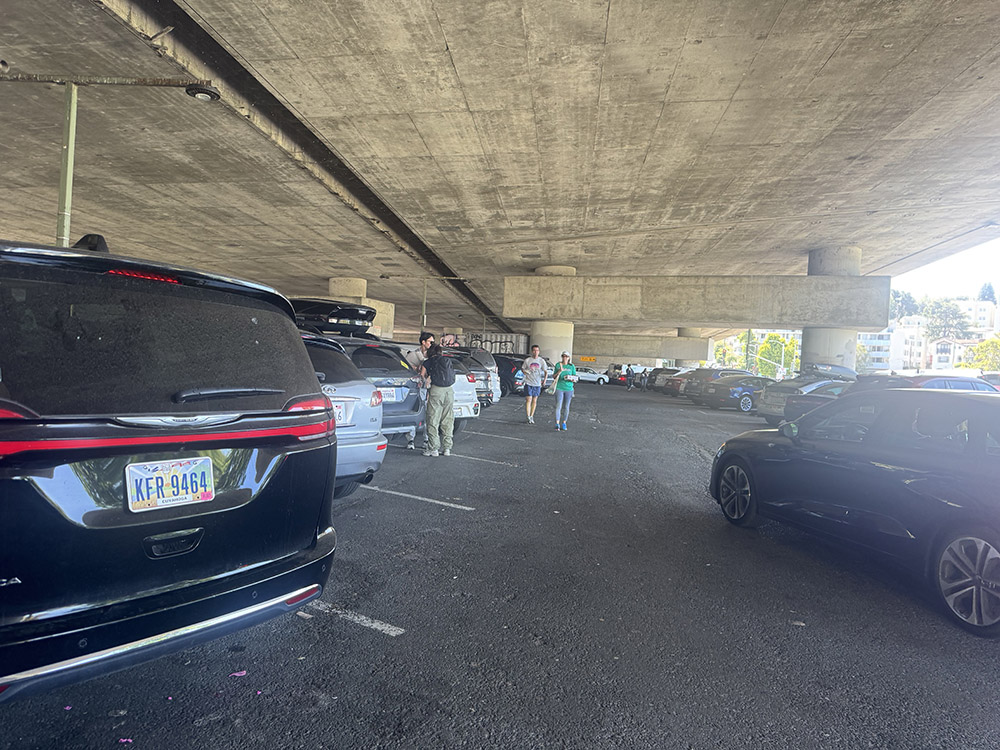
Parking in the Grand Lake commercial district has long been poorly managed. Parking spaces on Grand are hard to find, causing drivers to circle the block or double-park—leading to more congestion, air pollution, and conflict with bicyclists and pedestrians. Meanwhile, the Walker lot is moderately used, and the lot under the 580—despite offering over 140 spaces—often sits empty. Both are valuable assets that provide ample parking and should be better utilized. However, because the lots are seen as unsafe or hard to access—and funding to improve them has been essentially nonexistent—they’re often dismissed as viable parking options. This perception (or reality) is then used to justify needing to preserve every on-street parking space on Grand, even though the lots offer plenty of available spots.
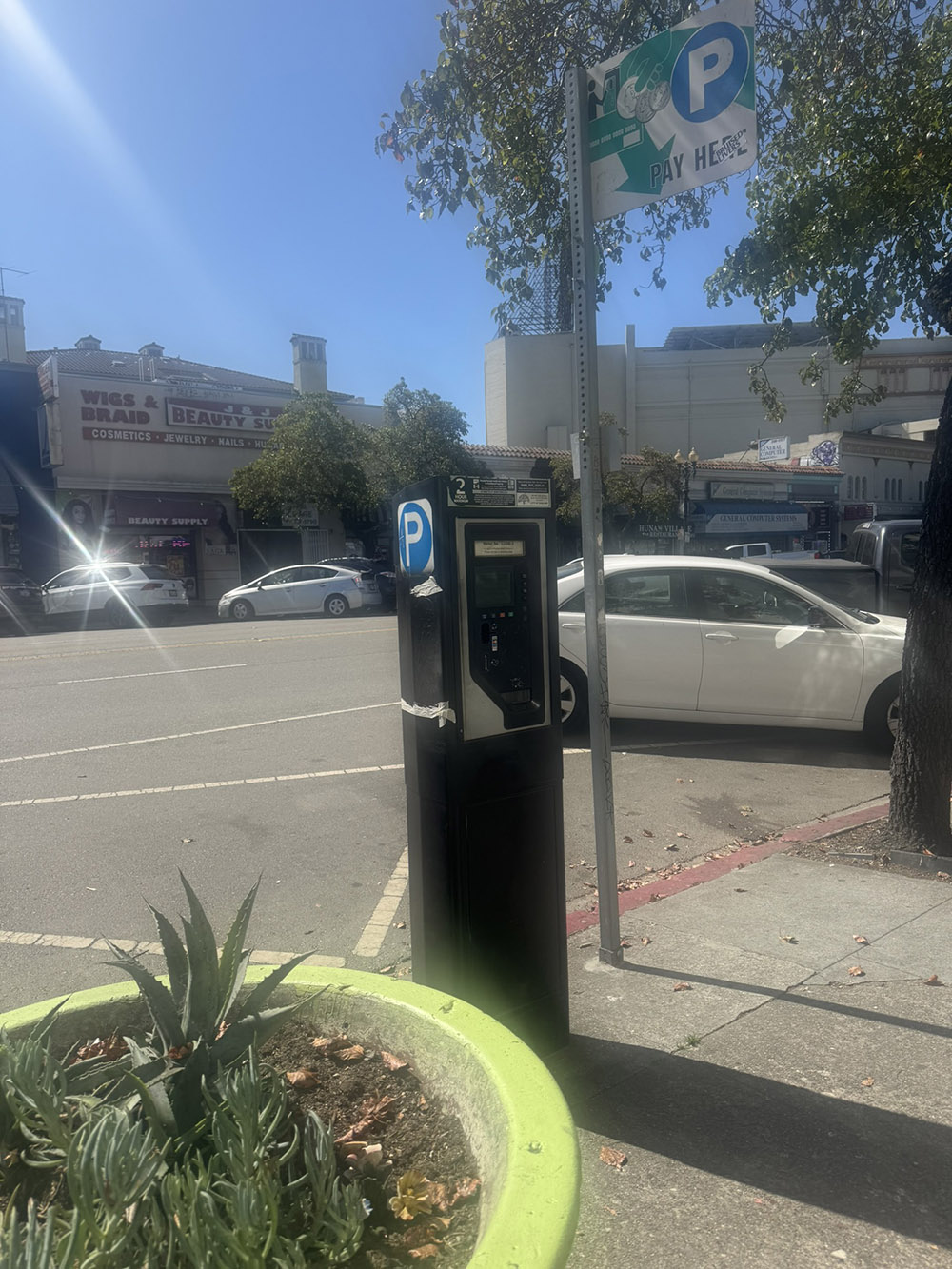
Across the country, cities have adopted demand-responsive parking—a strategy pioneered by UCLA urban planning professor Donald Shoup. The concept is simple: adjust parking rates based on demand to keep curb space available. The goal is about 85% occupancy—high enough to use space efficiently, but low enough that drivers can reliably find a spot without circling. Oakland already uses this method in Downtown, Chinatown, Montclair, and Jack London Square, where meter rates rise or fall depending on how many spaces are typically filled. In Montclair, for example, rates range between $0.50 and $4 per hour.
Shoup’s research, which is quite extensive, shows that pricing curb parking based on demand reduces cruising, cuts emissions, improves safety, and supports small businesses by making parking more predictable. However, to ensure political and practical success, he also recommends returning parking revenue to the neighborhoods that generate it—which brings us to the Parking Benefits District.
A Parking Benefits District (PBD) is an area where meter revenue is reinvested within the District to support local upgrades. The idea is that people are more willing to pay for parking when they see the benefits right outside their car doors.
For the Grand Commercial District, parking meter funds could be reinvested to support essential improvements in the Walker and 580 lots—such as lighting, safety, and wayfinding signage—and any remaining funds could be allocated toward sidewalk cleaning, street trees, and other local priorities determined through a community process.
Here’s how it could work:

- Grand Avenue and the Walker lot would shift to demand-responsive pricing; the I-580 lot would remain a low-cost option.
- The City would keep its current baseline revenue (based on, for example, 2022–2024 quarterly averages) as those funds are earmarked for the General Purpose Fund.
- Any additional revenue above that baseline would be returned to the corridor to be reinvested locally, starting with improving safety in the parking lots.
- PBD revenue could be combined with Business Improvement District (BID) dollars for even greater impact.
This kind of virtuous cycle has worked before. In Old Pasadena, a Parking Benefits District helped revitalize the area in the 1990s. Between 1993 and 1998, sales tax revenues quadrupled.
While loading zones can address short-term parking needs and help prevent double parking, they are not a substitute for active parking management. Revenue from the PBD could also be used to fund tools that enhance loading zone payment and enforcement.
A few implementation details would need to be worked out. If meters in Grand Lake aren’t already equipped for variable pricing, the City could bond against future revenue to upgrade them. It’s unclear if Oakland has a formal PBD framework, so a policy or ordinance might be required. To address concerns from employees about rising parking rates, the City could offer discounted parking passes for workers using the 580 or Walker lots, while keeping prime curbside spaces available for customers.
But none of this will work without enforcement. Meter compliance on Grand and Lakeshore is spotty at best. Any meaningful parking reform must include stronger, more consistent enforcement so the policy achieves its intended results.
The critical action: Get Caltrans back to the table to fix the Grand/Lake Park Intersection
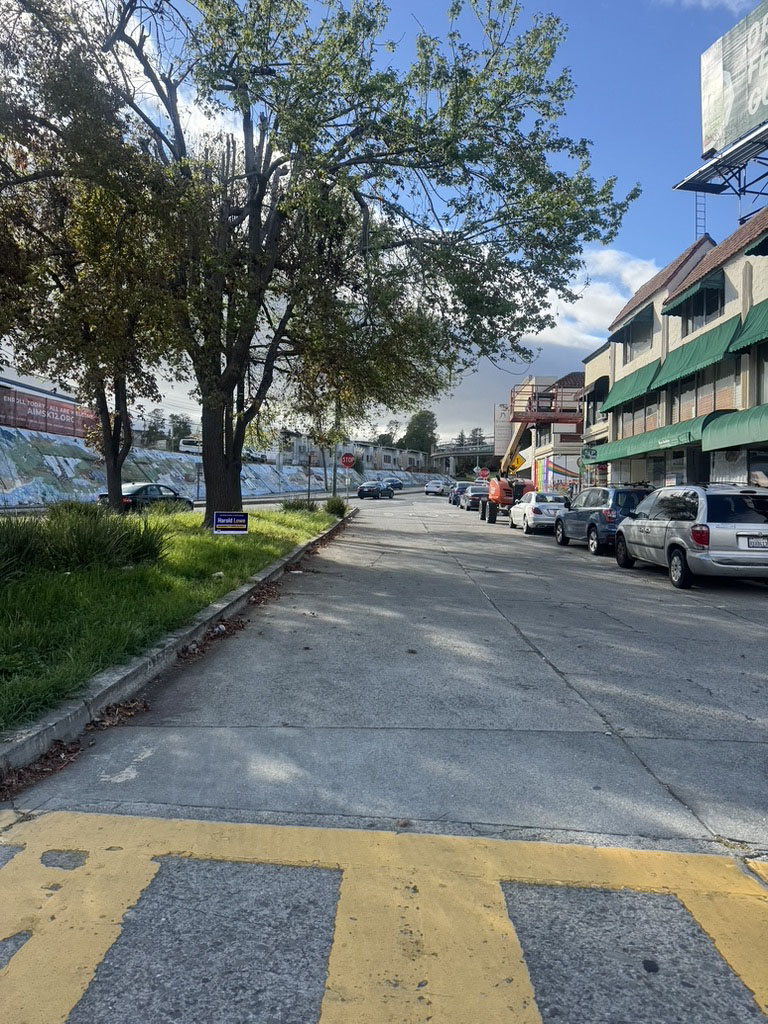
Caltrans – the state agency that manages California’s highways – was working with the City of Oakland to develop the redesign of Grand Avenue under I-580 and the massive Grand/Lake Park intersection, with implications for the Grand commercial corridor. This collaboration, part of the I-580 Bridge Rehabilitation Project, made significant progress: environmental review was completed, and detailed designs were drawn up.
Then, suddenly, Caltrans pulled out, citing vague concerns about funding and offering no explanation to the public.
This is unacceptable. A government agency should not be permitted to abandon a planning process without transparency or accountability. It’s unacceptable that OakDOT and the City Council allowed it to happen without pushback. And it’s unacceptable that this enormous, hostile intersection will remain unchanged while plans to improve it are left on the shelf.
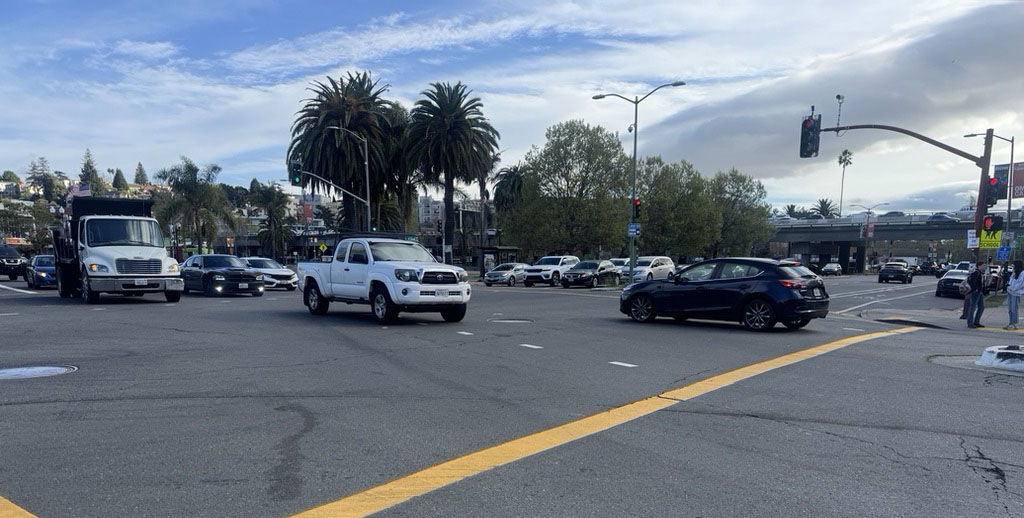
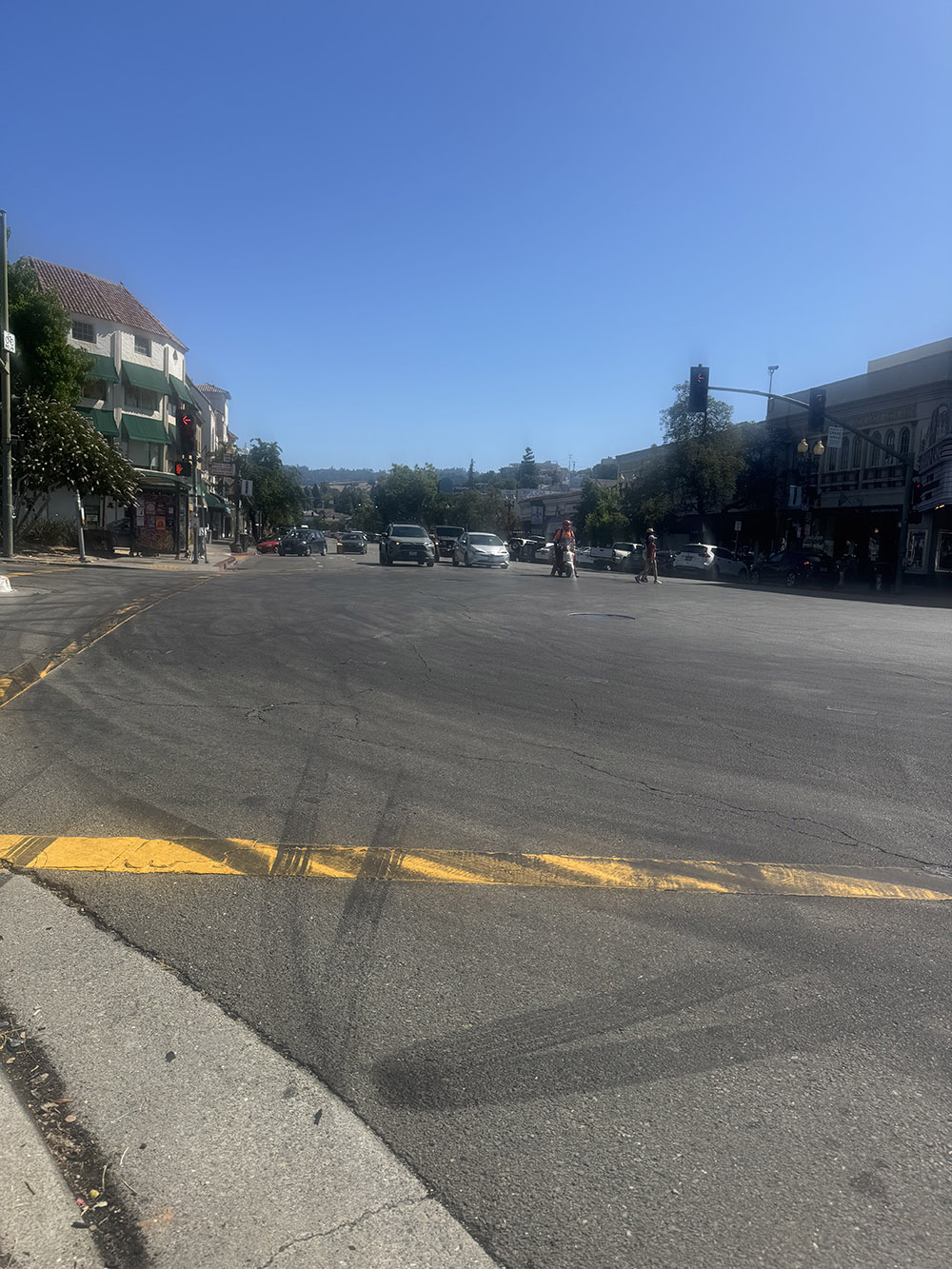
This intersection is not only oversized and dangerous for pedestrians, bicyclists, and drivers—it has also become a hotspot for sideshows. That alone is evidence that the design promotes high-speed, reckless behavior. With Caltrans’ collaboration, the Grand Ave redesign could narrow the intersection, add bulb-outs, build protected bike lanes, and install proper bus boarding islands. The Grand Ave redesign project doesn’t have the budget for these upgrades without Caltrans.
These upgrades are also vital for the success of the Parking Benefits District: as long as the intersection remains unsafe and unwelcoming, people will be reluctant to park in the 580 lot and walk across Lake Park Drive to shop on Grand.
That said, we can’t afford to wait. Caltrans must return, but in the meantime, the City needs to step up. OakDOT must act now with quick-build interventions. Curb extensions, hardscape barriers, or even a temporary roundabout would reduce the intersection’s footprint, slow down turning vehicles, and deter sideshows. These tactical changes would immediately improve safety for the hundreds of people who cross here every weekend on their way to the farmers market, the library, or the bus stop, while making it impossible to do donuts.
The small point: Another proof point for two-lane success
Park Boulevard in Alameda should be added to the growing list of commercial corridors that have one lane in each direction and parallel parking, and are vibrant and thriving. I continue to ask anyone skeptical of one-lane street designs to walk down Piedmont, College, or Telegraph in Oakland, or Park Street in Alameda, and ask: why not here?
The Grand redesign presents a rare opportunity. I hope OakDOT approaches it with curiosity, determination, and the leadership necessary to bring Caltrans back into the fold.

Arielle Fleisher is a transportation strategist with a unique combination of expertise in public health, design, and urban planning. With a primary focus on transportation, she has worked tirelessly to improve the quality of the Bay Area’s transportation system, including initiatives to make Oakland’s streets safer. She has lived in the Grand Lake neighborhood since 2014.

Comments
5 responses to “Forging a Path Toward a Truly Grand Avenue”
“These upgrades are also vital for the success of the Parking Benefits District: as long as the intersection remains unsafe and unwelcoming, people will be reluctant to park in the 580 lot and walk across Lake Park Drive to shop on Grand.”
This. 100%. There is a ton of underutilized parking, but it is unsafe to walk from the parking lot to the shops nearby!!
About Caltrans, I agree wholeheartedly that they need to return to the table. Was especially disappointed that the plans for closing the slip lane which we endorsed here in the Splash Pad News in April 2022 won’t be implemented until they do so. About the Grand/Lake Park intersection, again I agree wholeheartedly and would welcome an opportunity to be part of that discussion. Would add that I’ve talked to OakDOT and Caltrans about installing metering lights on the freeway onramp where Santa Clara veers to the right. Cars currently accelerating as they go through the intersection would be forced to slow down. And finally, comparing this one-block long stretch of Grand to Piedmont, College, and Park Avenues is duplicitous as the volume of traffic on Grand is far larger and there are no other realistic alternatives.
“Duplicitous” (final sentence) is harsh and inappropriate.
David,
You’re absolutely right! After the fact, I regretted using that term and apologize. That said, I remain convinced that what works on Piedmont, College, and Park Avenues won’t work here. The other side of that coin is that the circumstances on Grand from MacArthur to Broadway are also entirely different and I do support that portion of OakDOT’s plans as I understand them — just as I actively supported the elimination of one lane in each direction on Lakeshore and later on Grand — in both cases, from Mandana to the Piedmont line.
Your thoughts are all well considered and argued, Arielle. Thank you for bird-dogging this important project process for all users of Grand Avenue.