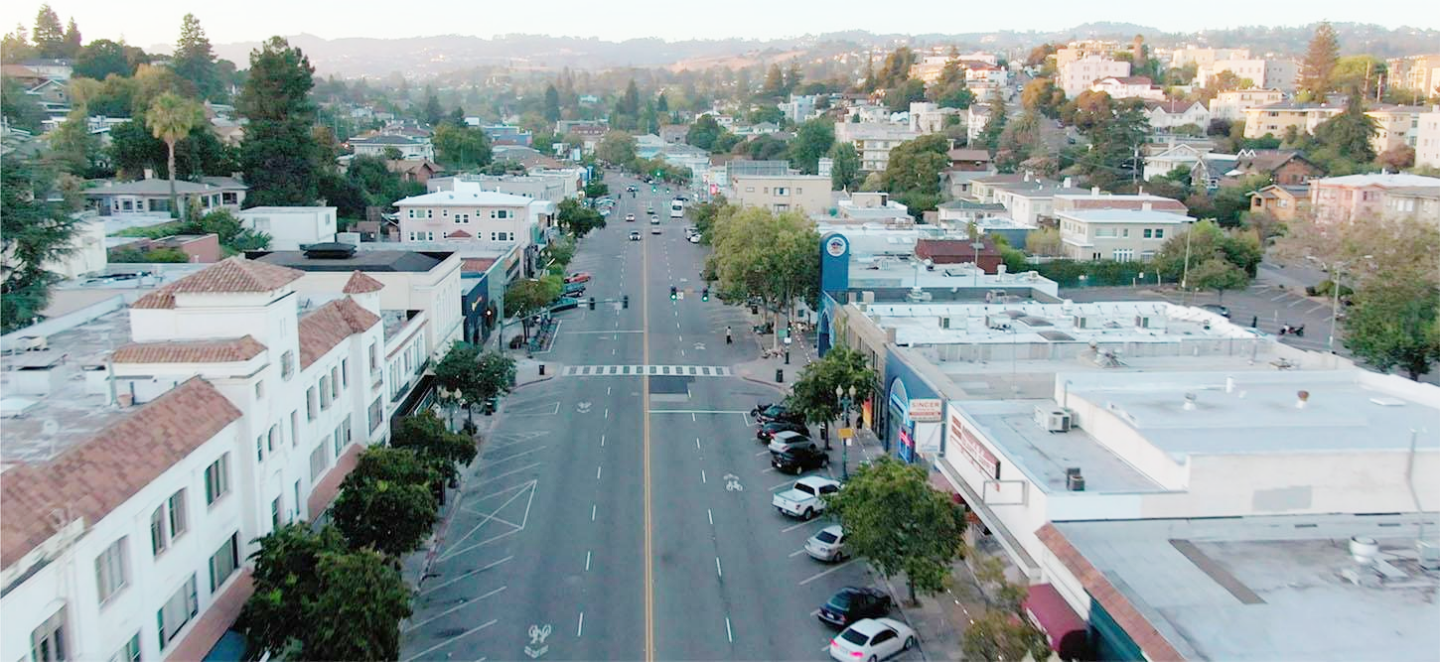
The City of Oakland is conducting outreach on the redesign of Grand Avenue, a project that—at least in theory—should be a cornerstone of a more vibrant, walkable, and safe corridor. This column has advocated for a “Grand Grand”—a street that serves people, not just cars. A place where you can walk your kid to preschool, bike to the bookstore, or cross the street without sprinting. Where local businesses aren’t competing with a freeway onramp, but thriving because people stroll, linger, and shop.
This isn’t just my vision—it’s one shared by countless others who want to see this project transform the corridor into a truly grand street.
The design that satisfies no one
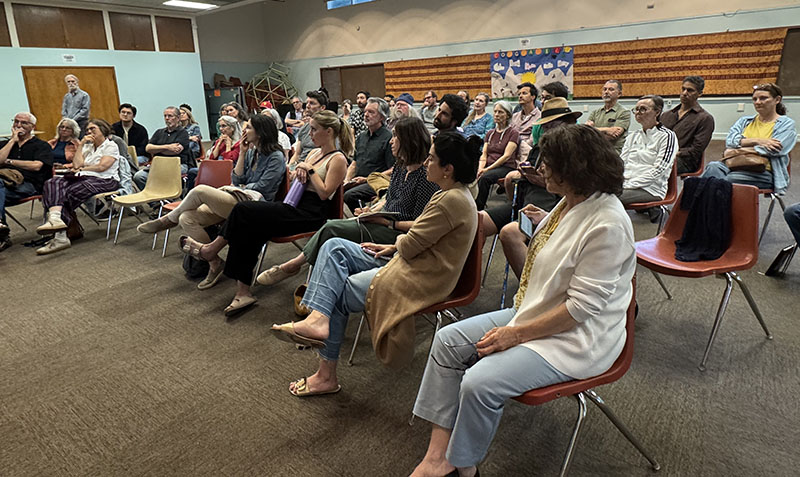
At the May 21 Grand Lake Neighbors meeting, the City presented its latest design for the Grand/Lake section. What struck me most was how little enthusiasm it generated. The plan frustrated just about everyone and failed to deliver on the basics: calming traffic, protecting pedestrians and bicyclists, and supporting businesses.
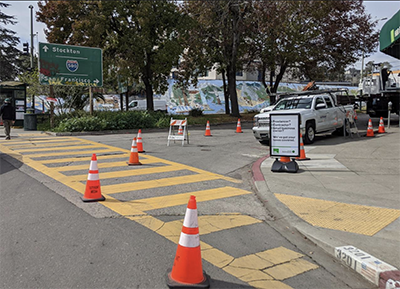
To name just a few issues:
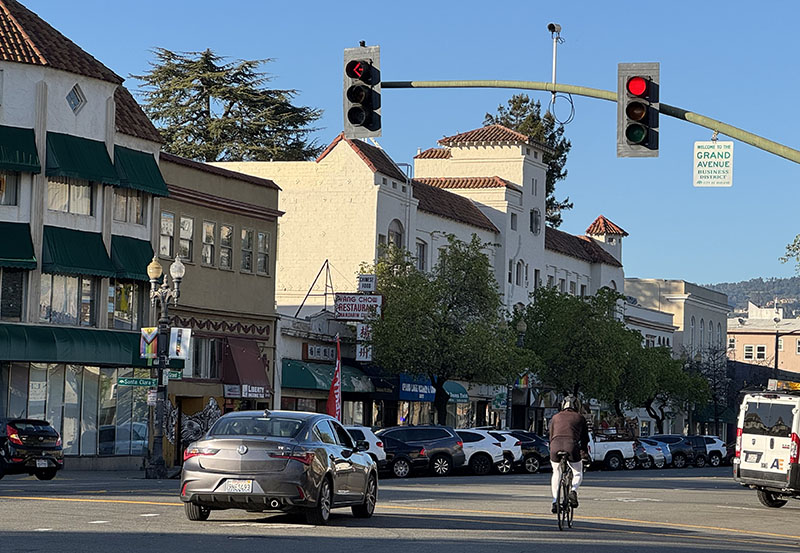
- It leaves major safety hazards unaddressed, like the enormous intersection at Grand and Lake Park and the dangerous slip lane.
- It converts a northbound traffic lane—currently used as a de facto loading zone—into an unprotected bike lane, which will inevitably become yet another double-parking lane.
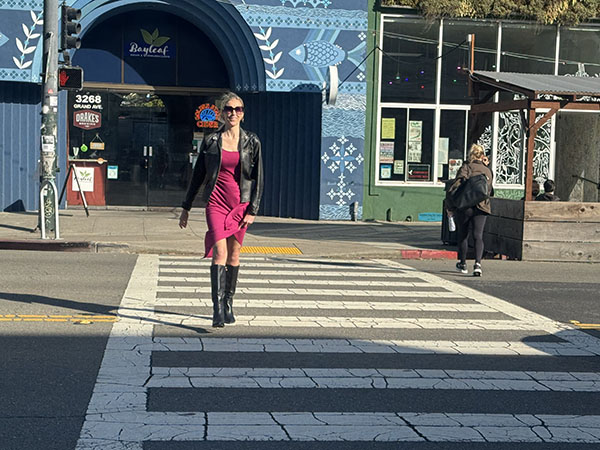
- It lacks meaningful pedestrian upgrades.
The design has been shaped by two data points: pushback from merchants over parking, and a modeling analysis predicting delay at the Grand/Lake Park intersection if a lane were removed in both the north and southbound direction. That was apparently enough to discard an alternative plan that called for changing angled parking to parallel on one side of the street and adding protected bike lanes), without clear criteria or a transparent decision-making framework.
At the meeting, we heard from a wide range of voices eager for the project to do more: the dad who bikes his kids to preschool; the dad-to-be who dreams of biking his daughter to the bookstore; parents navigating the treacherous slip lane to reach the library; teens darting through fast-turning traffic for boba; shoppers weaving through wide intersections to get to the Farmers Market. Yet there was no systematic analysis that captured their experience—their delays, their fears, their missed opportunities to visit Grand more often. No reflection of their calls for a safer, more welcoming corridor.
A process without purpose
Perhaps most concerning is the lack of clear goals. What is this project trying to achieve? Safety? Economic vitality? Climate action? Equity? Instead of starting with our adopted goals and designing from there, it feels like the city is just reacting to pushback on both sides. If we don’t define success, how can we design for it?
Right now, the only visible goal seems to be: just get it done. But this isn’t a box to check. This is a once-in-a-generation opportunity on a major corridor that won’t be touched again for 20 or 30 years. What we build now is what we live with for decades.
To be fair, paving projects come with real constraints—sidewalks and signals aren’t in scope, and funding is limited. The city has acknowledged that Grand needs more than this project can deliver. But this project is likely all we will ever have. Tradeoffs are inevitable and satisfying everyone is an impossible standard. But without clearly stated goals and criteria, we can’t engage these decisions thoughtfully.
What a Grand Grand could be
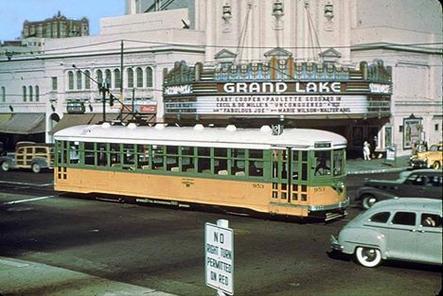
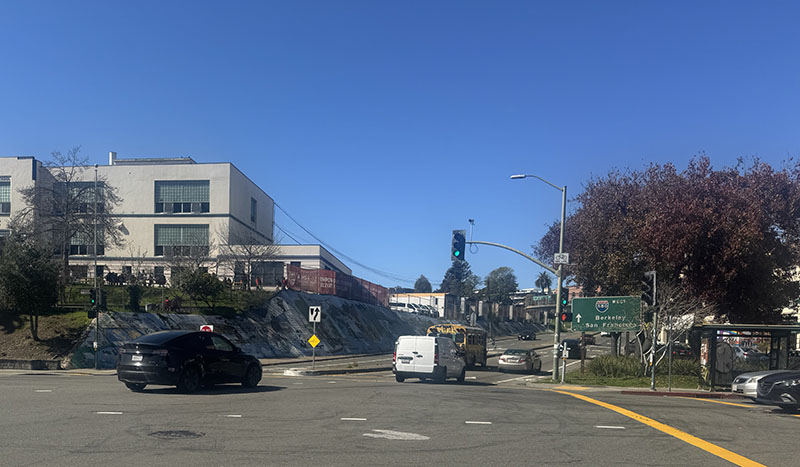
It doesn’t have to be this way. Grand once had two streetcar lanes running down the center, with one vehicle lane in each direction. It was a true multimodal, neighborhood commercial corridor — not a freeway onramp with some shops scattered along it. It can be that way again.
Look across Oakland: the city’s most successful commercial streets—Piedmont, College, Telegraph—are narrow. Two lanes. Parallel parking. And they’re thriving. These corridors are testaments to the fact that vibrant local economies don’t need wide roads or angle parking. They need people.
I urge anyone skeptical of one-lane designs to walk down Piedmont or College and ask: why not here?
At a minimum, Grand needs:
- Ample loading zones
- Significant pedestrian upgrades, especially at the Grand/Lake Park intersection, to prevent sideshows and slow dangerous turns
- A protected bike lane—yes, even for a short stretch—because this is one of Oakland’s busiest corridors, and people will bike if it feels safe
If the City opts against protected bike lanes, it should relocate the loading zone to the center of the street with a left-turn pocket for turns onto Lake Park and add ample loading on both sides. Loading is a key activity on Grand and it cannot be accommodated by retaining all or even most of the existing parking. Meaningful tradeoffs between parking and loading will have to be made.
Where we go from here
This isn’t about cars vs. bikes vs. pedestrians vs. transit riders. Most of us use all of these modes. It’s about building a street that serves more than just the need to funnel traffic to the freeway. A corridor where kids can walk to school, small businesses thrive, and we begin to take our safety and climate goals seriously
Measure U, which funds this project, calls for following the city’s bike plan “wherever feasible.” It is feasible here—and yet the plan ignores that mandate. It’s not just a missed opportunity—it’s a violation of our own policies.
I’m not calling for a delay. I’m calling for a design that actually does something. If we move forward with a redesign that pleases no one, solves no problems, and locks us into another generation of mediocrity, then we’ll have wasted more than a construction window—we’ll have wasted a moment when we could have made Grand truly grand.
I know changing hearts and minds is hard. I recognize people have different visions for Grand. But I also know this: more lanes do not equal more success. Study after study shows that bike lanes boost local economies. More than 250 Oakland residents said a safe Grand could be an economic catalyst—only if it felt safe and inviting. The City’s own climate plan calls for an 83% reduction in emissions by 2050. Transportation makes up nearly a quarter of those emissions. The best way to cut them? Make it easier and safer to drive less.
I see parents rushing across intersections. Kids dodging cars at the slip lane. Neighbors avoiding the corridor because it’s just too unpleasant. And I believe—fervently—that Grand can and must live up to its name.
Make your voice heard for a grand Grand. Please take a moment to email the project manager, Charlie Ream, at CReam@oaklandca.gov or attend an outreach event this summer. Comments on this post are also welcome.

Arielle Fleisher is a transportation strategist with a unique combination of expertise in public health, design, and urban planning. With a primary focus on transportation, she has worked tirelessly to improve the quality of the Bay Area’s transportation system, including initiatives to make Oakland’s streets safer. She has lived in the Grand Lake neighborhood since 2014.

Comments
7 responses to “A grand Grand is still within reach”
Based on this article and the comments plus my own thoughts over the years, here is comprehensive summary proposal for the Grand Avenue redesign, safety, business impact, and civic priorities:
📝 Proposal Summary: Grand Avenue Redesign — A Balanced Approach for a Truly Grand Corridor
As a longtime Oakland resident and contributor to urban improvement discussions, I believe the Grand Avenue redesign presents a rare opportunity—but only if it is executed with balance, transparency, and community focus. This corridor must serve not just as a conduit to the freeway but as a vibrant, accessible, and economically viable neighborhood destination. The design should reflect the reality on the ground—not just a policy ideal.
⚖️ Core Principle: Balanced Planning
This project must balance five critical factors:
• Beautification
• Safety
• Income generation
• Expense
• Actual usage patterns
🚸 Pedestrian & Cycling Safety
• Raised pedestrian crossings at key intersections to slow traffic and protect walkers.
• Raised bike lanes aligned with the pedestrian level in high-traffic areas to maximize safety and create neighborhood cohesion.
• Roundabouts at major intersections (e.g., Grand & Lake Park) to maintain flow, reduce accidents, and eliminate signal costs.
• Slip lane removal (especially across from the Grand Lake Theatre) to reduce high-speed turning and create space for a small park or green area.
🅿️ Parking, Loading & Business Viability
• Angled (diagonal) parking should be preserved where feasible, especially in shopping corridors, to support merchants and city tax revenues.
• Support dynamic metered parking to manage turnover and maximize both city revenue and customer access.
• Loading should occur in early hours to avoid disrupting business operations and pedestrian flow during peak times.
• Parklets should remain only where business demand exists and be well-maintained with added greenery or seating where underused.
♿ Accessibility & ADA Compliance
• Enforce consistent ADA standards, including logical placement of touch-sensitive pedestrian buttons.
• Confirm that space is not a limiting factor and validate accessibility in every design phase.
🌳 Beautification & Community Identity
• Install tall, solid trees every 12–15 feet to reflect the “grand” theme of Grand Avenue.
• Use artistic paving that reflects each neighborhood’s unique identity.
• Integrate flowered arbors, vines, and visual accents along sidewalks and key public areas.
• Prioritize strategically placed benches and clean, functional parklets to increase usability and vibrancy.
🛑 Traffic Control & Abuse Prevention
• Avoid ineffective features like flexible bollards; they do not ensure safety and degrade aesthetics.
• In areas prone to donuts or illegal spinning, use scored or bumped asphalt to physically deter the behavior.
🗣️ Community Engagement & Iteration
• Design, quality, and implementation should happen in small, iterative phases, particularly in commercial corridors—one block at a time to allow community feedback. Note: This substantially reduces impact to neighborhoods and notably business when done in parallel
• Long, uninterrupted stretches can follow more traditional timelines.
🌍 Policy Alignment & Futureproofing
• All designs should align with Oakland’s adopted climate action plan, mobility goals, and ADA policies.
• Where permanent infrastructure (e.g., raised curbs) is proposed, cost, adaptability, and disruption must be weighed against long-term gain.
• Ensure all projects are driven by competitive hiring and capable design standards—mediocrity locks us into decades of dysfunction.
✅ Conclusion
Let’s not jam through a design that solves little and pleases no one. Instead, let’s build something intelligent, beautiful, inclusive, and practical—something truly grand.
Cheers,
~d
This plan needs a lot of rethinking and just jamming it through just to get “something” done is the wrong approach.
There has been no mention of the months long disruption that the raised curb bike lane construction will cause. Just look at what has been going on at Grand and Harrison. How can any business survive when massive construction occurs for months, eliminating parking and loading. BART construction destroyed Market Street in San Francisco
I just returned from a visit to New York City. There are hundreds of miles of bike lanes in the city and virtually none are built with raised curbs. It is all paint. This allows for adjustment as the impact of the changes becomes apparent and the problems will become apparent, Using curbs is a massive waste of funds that might be used spread more reasonable improvements throughout the city.
I second Ms. Fleisher’s observation. As a designer and planner, the first requirement of a project is to identify the issues, examine the universe of solutions and then choose those solutions that best address the solutions. There should be a clear record of that investiation and deliberation. That doesn’t exist here. What seems to be happening here is that bike lane proponents have hijacked the process to serve their narrow needs. There are so many less disruptive ways to achieve the traffic issues, speeding, pedestrian safety and yes bicycle use that have not been investigated.
I attended a meeting of the Oakland Bicycle and Pedestrian Advisory Commission. OAKDOT project manager Charlie Ream made a presentation. He knew all the bicycle proponents and seemed to have a personal relationship, by and large agreeing with everything they suggested. When he presents to the business community all he can say is how he can’t agree with their suggestions.
As just one example of poor planning. Proposing a bus stops in the only traffic lane just before Mandana and just after the light at Elwood. Is a terrible idea, would surely clog the intersection on a red light and encourage people to swing out into the oncoming traffic lane Even suggesting such a bad solution puts the quality of the rest of the plan in question in my mind
The plan refers to protected bike lanes but I don’t see specifics. Are they really “protected” or will vehicles continue to block bike lane access?
Totally agree with your assessment of the other successful business districts such as College Avenue. Grand Ave does NOT have to continue to serve mainly as a fast entrance to 580.
Has anyone taken a trip down Telegraph. It is a disaster. Merchants are unhappy with it, parking is impossible, and the bike lane usage is minimal. Oakland is in dire need of attracting businesses and clients to offset the financial disaster. Yet… we consider and look at ways to reduce client traffic and hurt businesses.
The parklets remain, long after covid restrictions have been lifted. How do we get the parklets cleaned up and maintained. Doesnt look like the supporters are actively involved in cleaning those up or insisting on visual standards and maintenance.
Lets start thinking of ways to increase and attract businesses. Does anyone really think a business is going to remain open when their client traffic subsides. Are bikers and dads walking their kids to school, going to generate the revenue needed to solve our financial crisis. If you cant find parking or are looking at a mess, you go elsewhere and spend. Think about it, please.
Thank you for writing this, Arielle. It’s incredibly frustrating that certain people (including your fellow Splash Pad columnist) seem determined to ignore the definitive research that road diets boost local economies. I have emailed Mr. Ream already, and will continue to do so.
I have been a business owner on Santa Clara Avenue (on-ramp to 580 West) for over 35 years and we are still doing business there. If these parking spaces are taken away on this strip of Santa Clara, it will only make it more difficult for people to come to our businesses. As it stands now, parking is horrible already.
Parklets for restaurants were once built as a temporary solution to the Covid outbreak. These parklets have reduced the amount of parking for people to come to Grand Ave area to do business. The thriving Saturday farmers market is lovely, yet hard to park.
We have clients who will not make appointments on Saturday because there is no parking.
Which merchants are pushing back on our safety improvements? I’d like to know which businesses I should avoid visiting when I visit on foot or by bike.