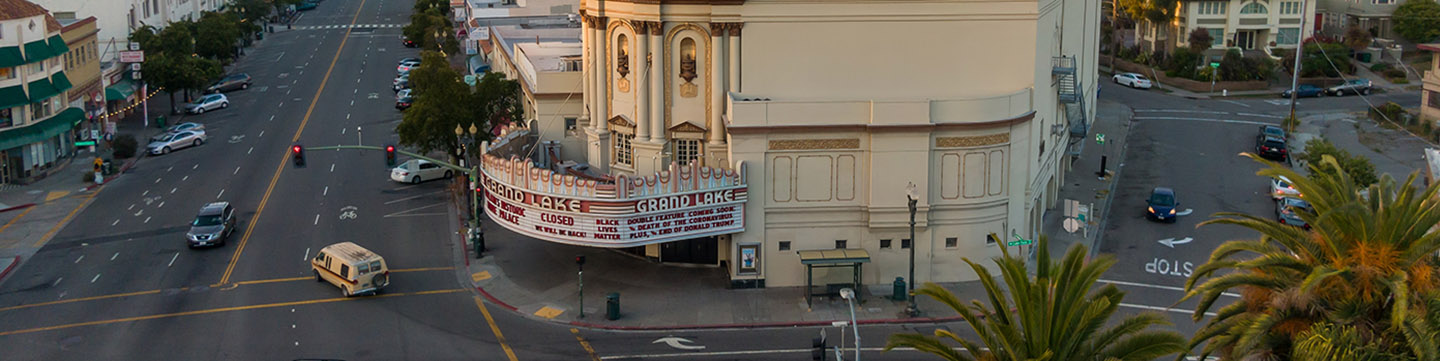
Over the past few months, I’ve shared a vision for Grand between Lake Park and Elwood that differs from the City’s proposed design in key ways. The alternative envisions a slower, safer street with fewer lanes, protected bicycle infrastructure, and robust pedestrian safety upgrades to create a truly “grand” Grand — a vibrant, thriving, and welcoming corridor.
Despite years of planning and public meetings, the City has never surveyed residents or businesses to collect meaningful, systematic input on its design or possible alternatives.
Earlier this year, I asked readers: What does a truly ‘Grand’ Grand Avenue look like to you? Over 250 Oakland residents responded, sharing their hopes and concerns about the corridor’s future. Along with comments on my columns and voices at community meetings, a clear picture has emerged: there’s a growing constituency in favor of a safer, calmer, more people-friendly Grand Avenue.
Of course, not everyone agrees. But without a city survey asking residents and businesses directly — Do you support OakDOT’s design? Would you prefer an alternative? — we lack a systematic understanding of what the community wants for this street.
That’s why I’m asking.
I’ve created two short surveys — one for community members and one for businesses — to better understand what people want for this section of Grand.
You may complete and submit the relevant survey using the links above.
Two Visions for Grand
Over the past several months, neighbors have been working together on a community-driven alternative to OakDOT’s design.
OakDOT’s design (Figure 1) would remove a lane only in the Piedmont direction and includes painted bike lanes. Painted lanes offer limited, if any, protection to bicyclists and will likely become de facto loading zones, perpetuating the double-parking and chaos that currently plagues Grand.
Figure 1: OakDOT’s proposed design for Grand between Lake Park and Elwood

The Community Alternative Design (Figure 2) takes a different approach, prioritizing safety for all road users while addressing key concerns raised by local businesses and residents. Our goal was to find a design that responds to the primary merchant concern — parking — while providing genuine protection for cyclists. Given that Grand is 80 feet wide, there’s considerable design flexibility. The Community Alternative Design:
- Removes one lane in each direction, calming traffic
- Adds a protected two-way cycle track on the north side of the street
- Preserves most on-street parking, consistent with OakDOT’s design, while creating genuinely safe spaces for people walking and biking.

Figure 2: Community Alternative Design for Grand between Lake Park and Elwood
Both designs assume some parking is reconfigured to loading zones; the Community Alternative Design also proposes adding loading zones in the Walker parking lot. Both retain and encourage parklets and include pedestrian safety features like bulb-outs and median islands. While the community design reflects interest in broader improvements such as circulation changes, a parking benefits district, and safety upgrades to nearby parking lots, these are not prerequisites for the core street redesign and can be addressed in future phases.
We believe the Community Alternative Design will transform this section of Grand from a corridor built to serve the freeway to a corridor built to serve the neighborhood.
Importantly, OakDOT’s own traffic analysis did not find the road diet to be infeasible. Rather, it found that a left-turn arrow would be needed at Grand and Lake Park to prevent traffic from backing up, not that the road diet itself would cause congestion. Since signal upgrades aren’t possible without Caltrans, we’ve proposed prohibiting left turns from Grand to Lake Park and redirecting that traffic one block south to MacArthur, where there is a dedicated turn arrow and left-turn pocket. This change, which I’ve discussed here and here, would enable removing a lane in the downtown direction and, from there, adding the protected bike lane.
To be clear, the Community Alternative Design isn’t a slam dunk. Details remain to be worked out. But it’s a design that addresses key business concerns and meets community desires for a slow, safe, and people-centered Grand.
Your turn
I’ve said before: my goal with this column is to share an alternative vision for Grand, one where the street lives up to its name. My hope is that I’ve helped readers see a different point of view: that a thriving street isn’t defined by how many cars it moves, but by how many people it brings together; that more lanes or parking spots are not prerequisites for success; that now is the moment to reimagine Grand as a people-oriented corridor, not cement its role as a glorified freeway on-ramp for another generation.
So now I’m asking you: Which Grand do you want to see?
Please take a few minutes to share your perspective. Your input will help shape the conversation and the future of Grand.
👉 Community Survey
👉 Business Survey
(The survey is optional and not an official city survey; anyone is welcome to participate. The survey closes on 11/17, so please respond quickly.)
Arielle Fleisher is a transportation strategist with a unique combination of expertise in public health, design, and urban planning. With a primary focus on transportation, she has worked tirelessly to improve the quality of the Bay Area’s transportation system, including initiatives to make Oakland’s streets safer. She has lived in the Grand Lake neighborhood since 2014.


Leave a Reply